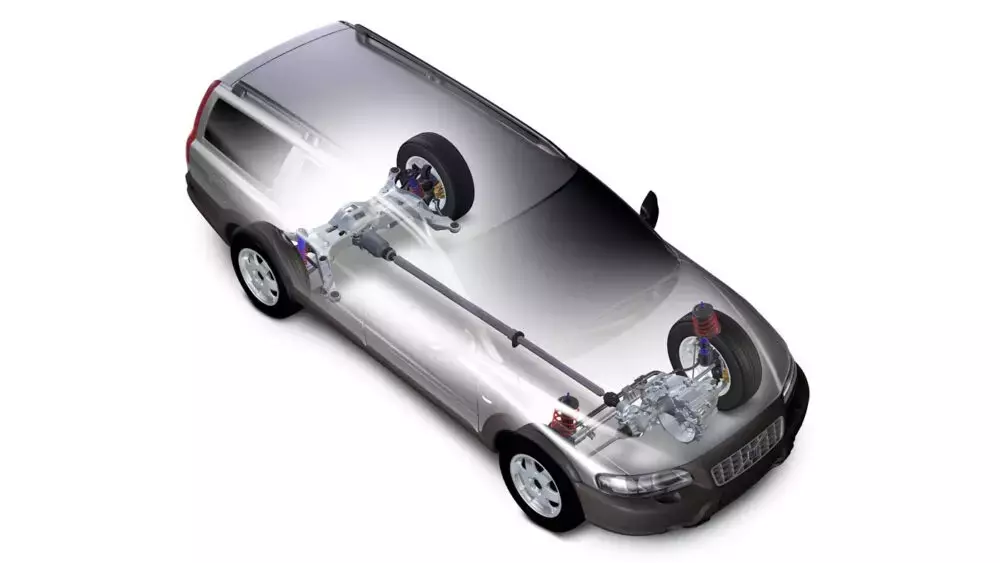
All-wheel-drive (AWD) systems have seen significant evolution since their widespread introduction in the 1990s, driven by the increasing demand for versatile vehicles. Initially, these systems borrowed robust components from truck platforms, such as transfer cases and mechanical differentials. However, as consumers sought more fuel-efficient and compact AWD options for passenger cars and crossovers, manufacturers developed lighter, more sophisticated systems. A key innovation in these modern setups is the integration of brake-based traction control, which leverages existing ABS hardware to manage wheel spin. This intelligent application of braking on individual wheels effectively mimics the performance of a limited-slip differential, enhancing traction and stability without the need for complex mechanical locking mechanisms. Understanding the operational principles and maintenance requirements of these systems is crucial for ensuring vehicle safety and optimal performance.
Brake-Based Traction Control: Enhancing All-Wheel-Drive Systems
In the evolving landscape of automotive technology, the integration of advanced braking systems with all-wheel-drive (AWD) powertrains has revolutionized vehicle traction and stability. This innovation, known as brake-based traction control, began to gain prominence following the SUV boom of the 1990s, when automakers sought to combine four-wheel-drive capabilities with enhanced fuel efficiency and a lighter vehicle footprint. Traditionally, AWD systems relied on mechanical components like transfer cases and locking differentials. However, modern designs often utilize sophisticated electronic controls, allowing for greater flexibility and efficiency.
Regardless of whether an engine is longitudinally or transversely mounted, power can be effectively distributed to all four wheels. In transverse engine layouts, power typically routes from the transaxle through a power takeoff unit to the rear axle. These systems often employ a center differential or coupling to manage front-to-rear torque distribution. A notable advancement is the use of the Anti-lock Braking System (ABS) hardware to manage traction. When a wheel loses grip and begins to spin, the ABS system intelligently applies the brake to that specific wheel. This action generates a reaction torque through the differential, redirecting more usable torque to the wheel with better traction. While it doesn't mechanically lock the differential, this brake-based intervention effectively creates a limited-slip effect, significantly improving the vehicle's ability to navigate slippery conditions like snow or mud.
This sophisticated system operates by constantly monitoring wheel-speed signals and making rapid adjustments. Depending on the vehicle’s specific design, it might apply brakes, reduce engine torque, or employ both strategies to mitigate wheel spin. Drivers may occasionally feel or hear the brakes engaging during these traction events, even in scenarios where parts of the stability control system are intentionally disengaged. Despite its effectiveness, brake-based traction control has operational limits, especially concerning heat generated by continuous brake application. Prolonged use in extreme conditions can reduce its efficacy compared to traditional mechanical locking differentials. Nevertheless, for everyday driving and occasional encounters with challenging road surfaces, this system offers a substantial improvement in vehicle control and safety.
Maintaining these advanced systems requires adherence to specific manufacturer guidelines. Unlike mechanical differentials, there are no clutches to service. However, the increased activity of the brakes and ABS hydraulic control unit necessitates careful attention to brake fluid specifications and service intervals. Many modern vehicles require low-viscosity DOT 4 fluid to ensure the hydraulic system responds precisely as designed. Furthermore, replacement brake pads must match the original equipment's friction characteristics across various operating temperatures to maintain optimal braking response and wheel-spin control. Wheel-speed sensors are also critical components; any inaccuracy in their signals can impair or disable traction control functions. Regular inspection of sensor wiring, tone rings, and verification of wheel-speed data are essential diagnostic steps to ensure the system operates correctly, preserving the vehicle's ability to manage traction effectively in adverse conditions.
The evolution of all-wheel-drive systems, particularly with the integration of brake-based traction control, highlights a significant leap in automotive engineering. This technology not only enhances vehicle safety and performance in challenging conditions but also underscores the importance of precise maintenance. As vehicles become increasingly complex, understanding these systems and adhering to manufacturer-recommended service protocols is paramount for both automotive technicians and vehicle owners. The continuous interplay between braking and powertrain systems offers a compelling glimpse into the future of automotive innovation, where electronic precision increasingly augments mechanical capabilities.
", "What Brake-Based Traction Control Means for AWD Vehicl